Whale Falls: Death?... or a New Beginning?

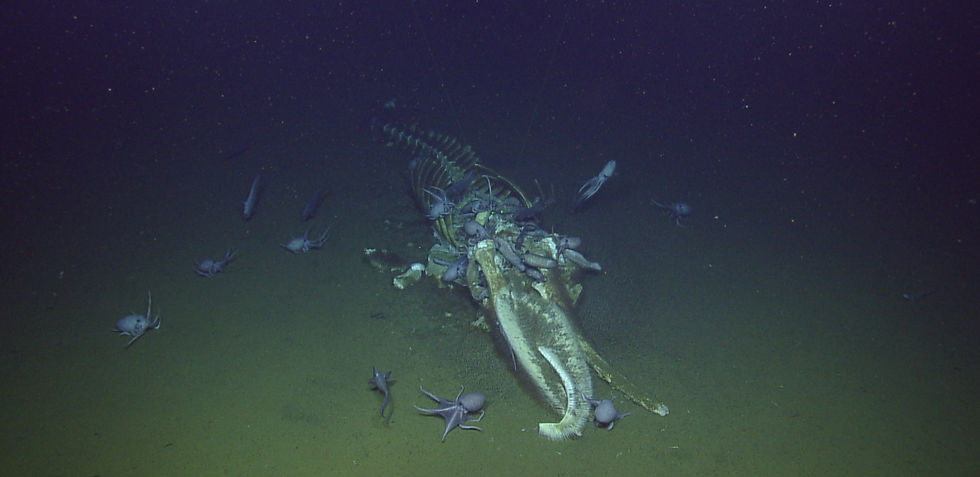
The remains of a whale fall near the Davidson Seamount in Monterey Bay National Marine Sanctuary. Photo: OET/NOAA
(Source 2)
Welcome to the very first post on Pollinator vs. Predator! I am so excited to start this journey with you!
(All sources will be cited at the bottom of the post)
The oceans of the world are a mysterious place filled with beauty, wonder, life, and a harsh reality for those that live there. Survival is easy for some, hard for others, and death is inevitable for all. But what happens once death has become a reality? There are many different things that happen when an animal dies in the ocean, but today we will focus on a certain song-filled swimmer. I’m talking about whales!
What is a Whale Fall?
When a whale dies in the ocean it is called a “Whale Fall”. This is because the whale’s body literally “falls” from the surface and sinks thousands of feet to the sea floor. Once the whale carcass reaches the bottom it provides a concentrated source of food and nutrients to the animals, bacteria, and organisms that live there. The ecosystem at the bottom of the ocean is relatively desolate, meaning that there isn’t much living/growing there to serve as a reliable source of food. This is why whale falls are such an important part of the ocean ecosystem. These carcasses can turn into a bustling new ecosystem that can last for weeks, years, decades, or even up to a century! It is very rare to experience a whale fall so if you happen across one then you are VERY lucky! Although it is highly unlikely due to the depths at which they typically reside, finding either an old or an active whale fall is seen as a once in a lifetime opportunity! (Source 3)

(Source 1)
How Does it Support/Start New Ecosystems?
"Decomposition of a whale fall occurs in three main stages, each of which benefits different marine species." (Source 2)
STAGE ONE: (roughly 2-18 Months)
The first stage allows animals like hagfish and sleeper sharks to pull soft tissue and fat from the whale’s carcass. (Sources 2+3)
STAGE TWO: (roughly 5 Months-5 Years)
The second stage involves animals inhabiting the whale’s bones and nearby sediments. They inhabit these areas because the decomposing body has enriched the area with organic compounds. (Sources 2+3)
STAGE 3: (roughly 10-100 Years)
In the third and final stage, bacteria decompose fatty composites within the bones, releasing hydrogen sulfide that feeds deep sea shellfish like mussels, clams, and snails. This final stage of whale decomposition occurs when only minerals are left from the bones, which provide a solid surface for suspension and filter feeders to settle on. This stage will last until there is literally no more space on the bones because they are covered in animals and organisms. (Sources 2+3)

(source 1)


Comments